

The Growing Pressures on UK Grid Capacity
Rising demand for UK grid capacity is reshaping how infrastructure projects are planned, prioritised and delivered.
The UK’s electricity network is under increasing pressure.
As the country accelerates towards net zero and digital infrastructure expands at pace, demand for grid capacity is rising from two directions: renewable generation connecting into the network, and large power users – particularly data centres – drawing from it.
This convergence is reshaping how grid capacity is secured, delivered and funded.
A Shared Constraint Across Sectors
Solar, wind, Battery Energy Storage Systems (BESS) and hydrogen projects are seeking connection at scale. At the same time, hyperscale and edge data centres require significant firm capacity to support digital growth.
Both typically require connections at 33kV and 132kV. Both face constrained nodes; reinforcement works and extended lead times.
While the drivers differ – decarbonisation for generation and digital demand for data centres – the underlying constraint is the same: access to available grid capacity.
Reform Is Changing the Rules
Ofgem’s connections reform programme is reshaping how capacity is allocated.
The shift from “first come, first served” to a milestone-based, “first ready, first connected” model is designed to remove speculative projects and prioritise those that are deliverable.
However, it also raises expectations. Developers must now demonstrate land rights, planning progress and financial readiness earlier in the process.
In practice, grid strategy can no longer sit downstream of project development. It must be addressed early, with robust feasibility and a clear delivery plan.
Delivery Risk Is Now a Commercial Risk
Securing capacity is only part of the challenge – delivering it presents its own risks.
Extra High Voltage (EHV) connections involve detailed design approvals, protection studies, land coordination and strict compliance requirements. Infrastructure delivery often requires significant upfront capital investment ahead of Final Investment Decision.
Where connection dates determine revenue – whether through power export or data centre energisation – delays become commercially material.
Certainty on cost, route and programme is therefore increasingly valuable.
A More Integrated Approach to Delivery
As grid capacity tightens, delivery complexity increases. Multiple stakeholders, fragmented delivery models and misaligned incentives can introduce delay and duplication.
More integrated delivery structures – where design, construction, funding and long-term asset adoption sit within one group – help reduce these risks.
By reducing interfaces and aligning accountability, this approach can:
- Improve programme certainty
- Simplify project management
- Reduce upfront capital pressure
- Provide clearer coordination from feasibility through to energisation
hile this does not increase available grid capacity, it can significantly improve how that capacity is secured and delivered.
Why This Matters
The UK electricity network is entering a period of structural change.
Decarbonisation, electrification and digital expansion are converging on the same infrastructure. Reinforcement will take time, reform will reshape access, and demand will continue to grow.
For developers across renewable generation and digital infrastructure, grid strategy is no longer a technical consideration – it is central to investment confidence and project viability.
Those who engage early, plan effectively and adopt structured delivery approaches will be better positioned in an increasingly constrained and competitive market.
Start the Conversation
If you are assessing grid capacity for a renewable or data centre project, early engagement and a structured delivery approach can significantly improve outcomes.
About Power On
Power On delivers Extra High Voltage (EHV) grid connections and electricity infrastructure across the UK. NERS accredited up to and including 132kV, we support renewable generation, storage and data centre developments with integrated design, build and adoption services.
As an Independent Connection Provider (ICP) with an in-group Independent Distribution Network Operator (IDNO), we design, construct, invest in and adopt the infrastructure we deliver – reducing interfaces and supporting long-term infrastructure delivery.
Further news at Power On...
- News

Prefab community heat hubs offer time - and cost-effective solution for high rise developments
We're proud to be delivering a pioneering prefabricated Community Heat Hub and communal heat network at The Green Quarter in Southall. The project will provide low-carbon heating to 2,538 homes, demonstrating how modern energy infrastructure can accelerate delivery and support the transition to more sustainable communities.
- News
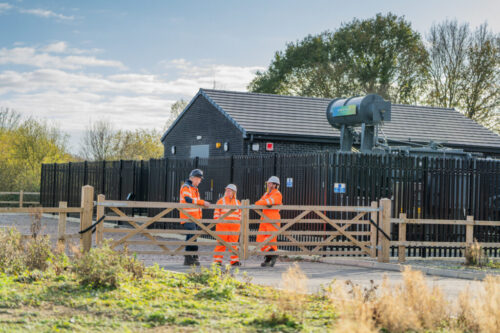
Why utilities fragmentation is holding back housing delivery
Utilities may account for only a small proportion of development costs, but their impact on programme delivery is significant. Discover why integrated multi-utilities delivery is helping developers reduce risk, improve efficiency and protect project outcomes.
- News
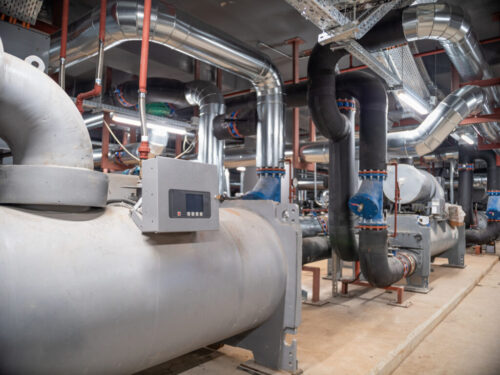
Digitalisation and Low-Carbon Housing: What Developers Need to Know
Neil Fitzsimons, Managing Director of Power On, explores how digitalisation is reshaping the UK's residential sector. From Networked Ground Source Heat Pumps to Community Heat Hubs and smart controls, this article sets out how developers, M&E consultants, and utility specialists can design, build, and operate genuinely future-ready low-carbon homes.