
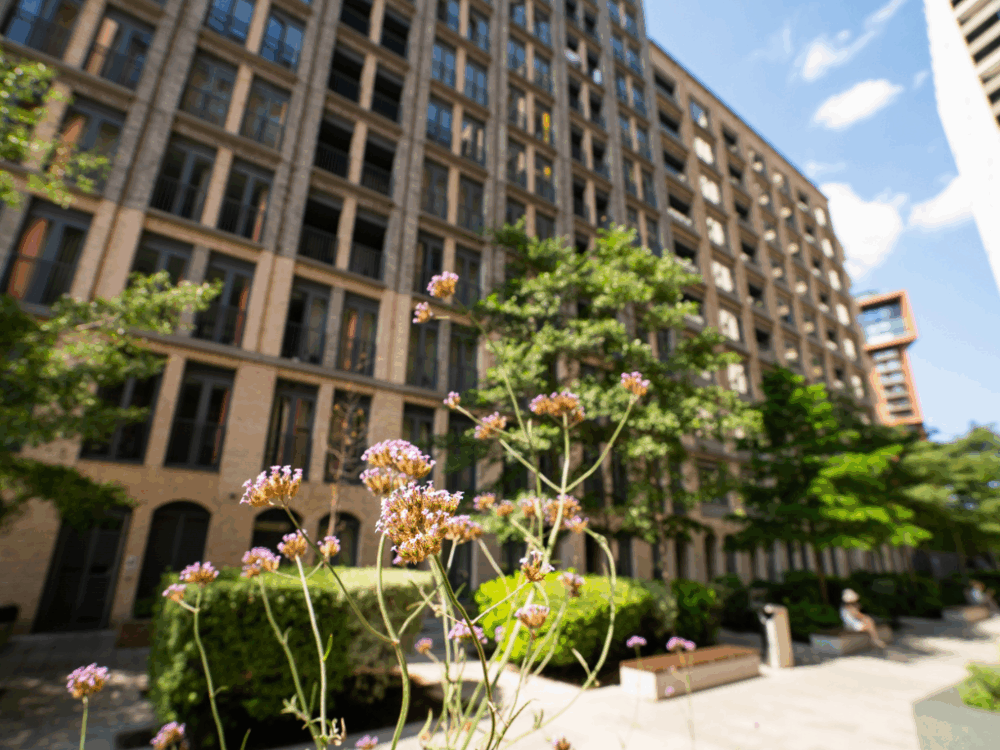
Gateway 2 requirements for M&E professionals explained
Gateway 2 under the Building Safety Act 2022 is transforming how high-risk buildings are designed and approved. For M&E professionals, early coordination and complete technical submissions are now critical to keeping projects on track.
Gateway 2 is a mandatory checkpoint for higher-risk buildings to comply with the Building Safety Act. While it came into force a while ago, with the timescales involved in planning, many mechanical and electrical (M&E) professionals are only now facing the challenges it brings. This article provides insight into how best to approach the new process.
Stringent rules for high-rise residential buildings, care homes and hospitals
The Building Safety Act introduces a more stringent regulatory framework in design and construction specifically for new high-rise residential buildings, care homes and hospitals, which are 18 metres or more in height, or at least seven storeys. Crucially, it requires the submission of detailed plans, including fire safety and structural integrity assessments, before any construction work can begin.
Proving compliance prior to construction
Gateway 2 requires a full technical design submission, which includes detailed and dimensioned substation layouts, diagrams of high- and low-voltage networks, cable route and riser layouts. The utilities design team plays a critical role in preparing the technical information and can also assist M&E professionals in ensuring they are providing the right initial information to ensure the smooth running and timeliness of the whole process.
M&E consultants working on higher-risk buildings (HRBs) must provide a comprehensive, complete, and fully coordinated technical design at Gateway 2. This submission, made to the Building Safety Regulator (BSR) before construction begins, shifts the industry away from the old practice of finalising designs during the build phase.
Non-compliance risks
The risks of non-compliance with Gateway 2 include delays, refusal of permission to construct or occupy the building and, ultimately, enforcement action. Failure to obtain approval at Gateway 2 can bring a costly halt to construction.
Many M&E professionals are still sketchy on the precise needs of Gateway 2 when it comes to high-rise buildings. This is not surprising as many are only now going through this process for the first time. Taking expert advice on the requirements from a utilities point of view can enable the process to progress smoothly and efficiently.
Key M&E considerations
Technical designs must now be completed and coordinated to a higher degree of detail and finality than was previously standard at RIBA Stage 4. This means that submissions must have full system layouts with detailed, dimensioned layouts for all M&E systems, such as substations, high- and low-voltage network diagrams, cable routes, and riser layouts.
Calculations and modelling must be included for smoke ventilation systems with all calculations and Computational Fluid Dynamics (CFD) modelling results included to prove the system meets performance requirements.
The BSR will not accept vague specifications or placeholders indicating “works to be designed by others”. Every element of the design must be fully formed and specified.
Fire and safety compliance and fire stopping are core design elements, which require proof that fire and smoke safety have been core components of the design from the start, not added as an afterthought. M&E design must include a robust smoke control strategy that is clearly documented and evidenced. It must show compliance with relevant standards such as Approved Document B, BS 9991, and BS 9999.
Providing evidence
The Gateway 2 application requires a signed competence declaration from the Principal Designer, Principal Contractor, and the client. M&E consultants will also need to provide evidence of their own competence to their client and consultants must maintain a complete and detailed record of safety-related decisions, calculations, and regulatory correspondence to ensure design choices are documented and defensible if a dispute arises. This means that the design submission must include evidence of compliance with the functional
requirements of the Building Regulations, including product certifications.
M&E professionals must engage early with utility providers, fire experts, and other designers. This ensures that all technical information is accurate and aligned from the start, helping to avoid delays. Any significant value engineering or design changes must be completed before the Gateway 2 submission, as changes after approval will trigger a formal, time-consuming change control process.
The ‘Golden Thread’ of information must be included. This is clear and documented evidence that demonstrates how safety-critical decisions were made throughout the design process.
Gateway 2 Enabling Service
M&E professionals should be aware that the BSR is currently experiencing backlogs and high rejection rates for invalid or incomplete applications. Failure to get the submission right the first time could mean significant and costly project delays.
We work directly with developers, consultants and M&Es to ensure they have the required design aspects for fire safety fully in place and we are now providing a Gateway 2 Enabling Service to assist developers and M&Es in the process. This includes a system for navigating the deliverables to ensure that all parties are aligned and that timelines will be met.
Ensuring the right information is delivered to the utilities company in the first place, in order to get the right outputs, can prove problematic and may hold up the whole process. Our Gateway 2 Enabling Service ensures the correct input and, therefore, the correct outputs. Depending on required timescales, we can at the Gateway 2 stage supply the entire design pack or, the individual parts of the design that are vital to the particular project to enable a fast turnaround on the essential elements. A carefully collated Building Operator Pack provides an easy format for transferring the key building owner information in a consistent manner.
Further news at Power On...
- News
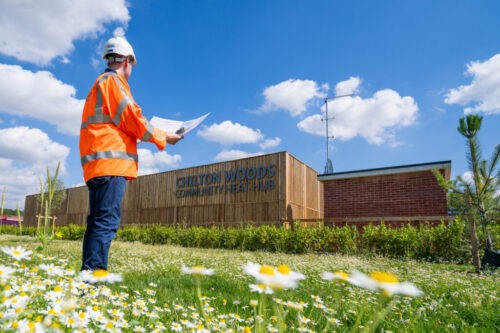
Prefab community heat hubs offer time - and cost-effective solution for high rise developments
We're proud to be delivering a pioneering prefabricated Community Heat Hub and communal heat network at The Green Quarter in Southall. The project will provide low-carbon heating to 2,538 homes, demonstrating how modern energy infrastructure can accelerate delivery and support the transition to more sustainable communities.
- News
Why utilities fragmentation is holding back housing delivery
Utilities may account for only a small proportion of development costs, but their impact on programme delivery is significant. Discover why integrated multi-utilities delivery is helping developers reduce risk, improve efficiency and protect project outcomes.
- News
Digitalisation and Low-Carbon Housing: What Developers Need to Know
Neil Fitzsimons, Managing Director of Power On, explores how digitalisation is reshaping the UK's residential sector. From Networked Ground Source Heat Pumps to Community Heat Hubs and smart controls, this article sets out how developers, M&E consultants, and utility specialists can design, build, and operate genuinely future-ready low-carbon homes.