
Webinar: What the Future Homes Standard means for High-Rise Developments and Heat Networks

The Future Homes Standard has now been announced, marking a significant shift in how low-carbon homes will be delivered – and raising important questions about how it will be applied in practice, particularly for high-rise and high-density developments.
At Power On, our regulatory specialists have been unpicking the full detail of the announcement to understand what it means in practice – what’s changed, where the challenges lie, and how this will impact the design and delivery of schemes.
Watch our recent webinar below to learn:
What the announcement really means – and what’s changed
Key timelines, including what the extended implementation period means for your projects
Why individual technologies are often not practical in dense, urban schemes
What the Future Homes Standard looks like in practice on real developments
The risks of delaying low-carbon strategy decisions
The role of heat networks in delivering cost-effective, scalable and future-proof solutions
While the Standard promotes individual technologies, it also highlights the limitations of these approaches in certain developments. With the timeline now extended, there is a growing risk that decisions made today may not align with future regulatory expectations.
This session is designed to help you understand how the Future Homes Standard applies in practice, and what it means for the design and delivery of your schemes.
Download the webinar slides
Further news at Power On...
- News
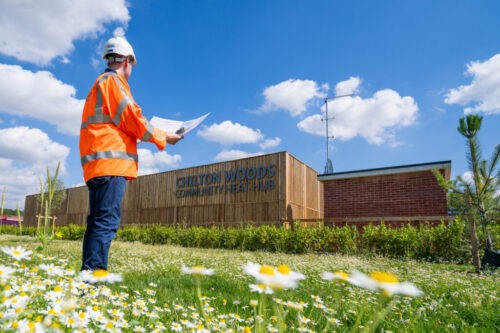
Prefab community heat hubs offer time - and cost-effective solution for high rise developments
We're proud to be delivering a pioneering prefabricated Community Heat Hub and communal heat network at The Green Quarter in Southall. The project will provide low-carbon heating to 2,538 homes, demonstrating how modern energy infrastructure can accelerate delivery and support the transition to more sustainable communities.
- News
Why utilities fragmentation is holding back housing delivery
Utilities may account for only a small proportion of development costs, but their impact on programme delivery is significant. Discover why integrated multi-utilities delivery is helping developers reduce risk, improve efficiency and protect project outcomes.
- News

Digitalisation and Low-Carbon Housing: What Developers Need to Know
Neil Fitzsimons, Managing Director of Power On, explores how digitalisation is reshaping the UK's residential sector. From Networked Ground Source Heat Pumps to Community Heat Hubs and smart controls, this article sets out how developers, M&E consultants, and utility specialists can design, build, and operate genuinely future-ready low-carbon homes.