
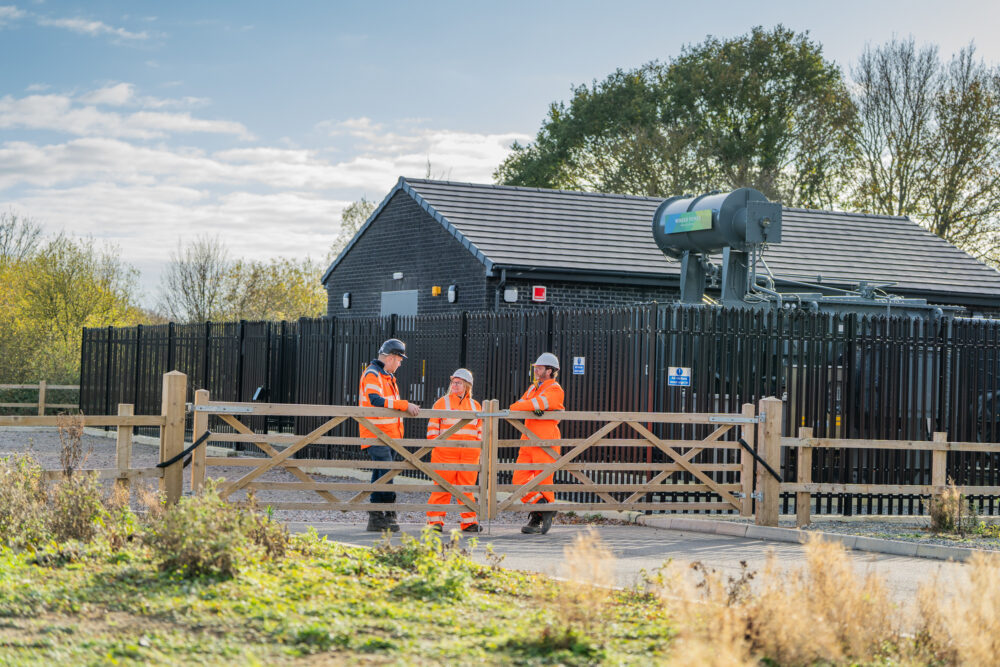
Why utilities fragmentation is holding back housing delivery
Utilities may account for only a small proportion of development costs, but their impact on programme delivery is significant. Discover why integrated multi-utilities delivery is helping developers reduce risk, improve efficiency and protect project outcomes.
Utilities infrastructure has become one of the most critical and underestimated barriers to delivering new development in the UK.
In a rapidly evolving landscape shaped by electrification, decarbonisation, digitalisation, grid constraints and tightening regulation, the need for resilient, integrated utility infrastructure has never been greater.
What developers increasingly need is not just delivery capacity, but a multi-utilities partner that can simplify complexity, provide financial certainty, and ensure long-term performance.
Traditional developments rely on multiple contractors and adopting authorities. This fragmented approach increases programme risk, slows delivery, complicates adoption, and introduces reputational risk for developers.
By designing and delivering all utilities together – including electricity, fibre, heat, water, wastewater, and gas – a multi-service provider reduces interfaces, improves coordination, and provides a single point of accountability from construction through to long-term operation.
This matters because utility infrastructure is not just a technical workstream. It sits on the critical path of development.
When delivery is delayed or performance falls short, the impact extends beyond the utility package to affect programme, sales, customer experience and ultimately the developer’s reputation. The market does not see the contractor it sees the development.
A more strategic measure of value
Utilities typically represent a relatively small proportion of total development cost – often around 4–6% – yet their impact on programme and overall scheme performance is significant.
For this reason, utility delivery should not be assessed on upfront financial value alone. A fragmented model may appear attractive commercially, but can introduce hidden costs through increased coordination, additional interfaces, and greater exposure to delay and underperformance.
The more meaningful comparison is the total economic value of the delivery model, including programme certainty, reduced management burden, long-term performance, and protection of the developer’s brand.
An investment-led model
One of the key differentiators to look for in a multi-utilities partner is an investment-led approach. By funding infrastructure upfront and retaining long-term ownership and operational responsibility through its group structure, Power On is fully aligned to deliver networks that perform reliably over the long term.
A partner for the future of infrastructure
The most effective multi-utilities partners are those that are fully invested in long-term outcomes, not just short-term delivery milestones. The result is infrastructure built not just for today’s developments, but to support the connected, low-carbon communities of the future.
To learn more, click here.
Further news at Power On...
- News

Prefab community heat hubs offer time - and cost-effective solution for high rise developments
We're proud to be delivering a pioneering prefabricated Community Heat Hub and communal heat network at The Green Quarter in Southall. The project will provide low-carbon heating to 2,538 homes, demonstrating how modern energy infrastructure can accelerate delivery and support the transition to more sustainable communities.
- News
Why utilities fragmentation is holding back housing delivery
Utilities may account for only a small proportion of development costs, but their impact on programme delivery is significant. Discover why integrated multi-utilities delivery is helping developers reduce risk, improve efficiency and protect project outcomes.
- News

Digitalisation and Low-Carbon Housing: What Developers Need to Know
Neil Fitzsimons, Managing Director of Power On, explores how digitalisation is reshaping the UK's residential sector. From Networked Ground Source Heat Pumps to Community Heat Hubs and smart controls, this article sets out how developers, M&E consultants, and utility specialists can design, build, and operate genuinely future-ready low-carbon homes.