
Future Homes Standard challenges: technical and compliance uncertainty leads poll
Over a quarter of industry professionals identify technical and compliance uncertainty as the biggest barrier to delivering Future Homes Standard-compliant homes, underlining the need for earlier action and clearer direction ahead of the 2027 deadline.
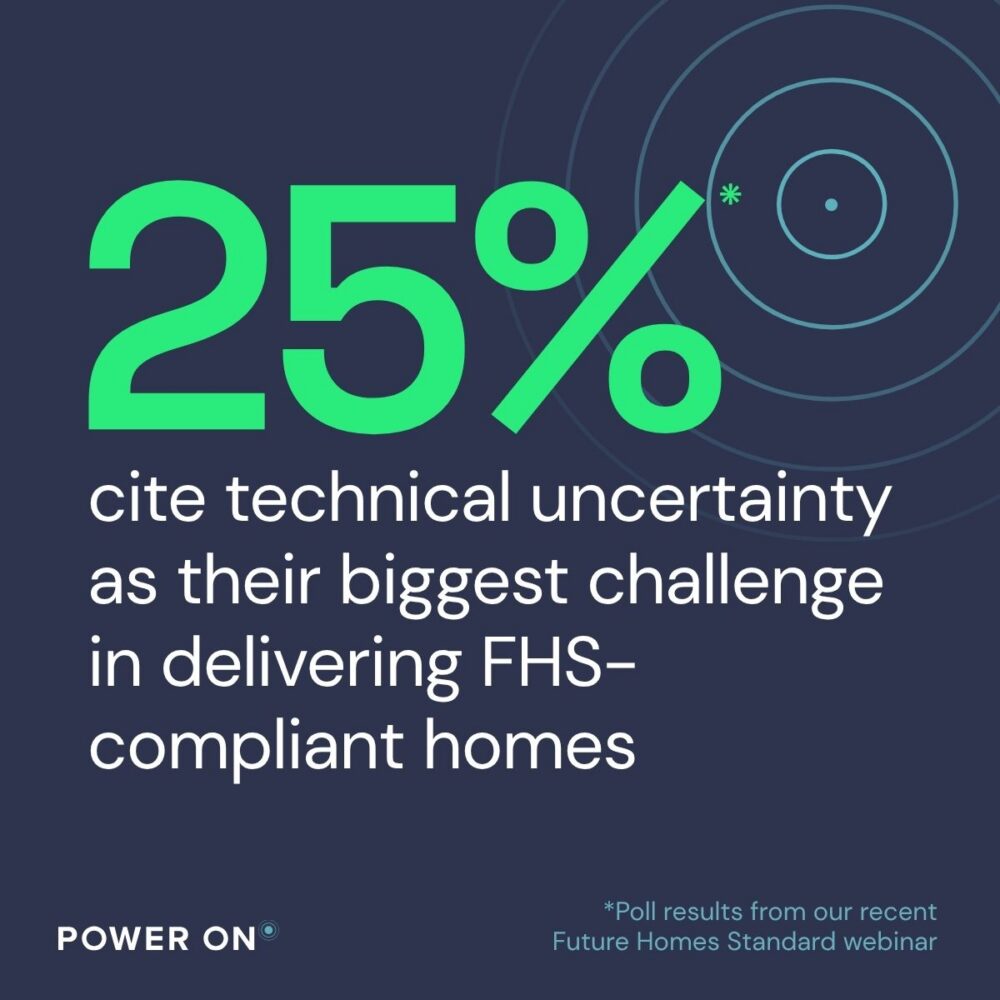
A poll of industry professionals attending our recent Future Homes Standard (FHS) webinar has revealed that 25% of respondents believe the biggest challenge in delivering FHS-compliant homes is technical and compliance uncertainty.
We asked attendees:
What do you see as the biggest challenge in delivering homes compliant with the new FHS?
- Technical/compliance uncertainty 25%
- Planning and local authority requirements/timelines 21%
- Additional building costs 21%
- Grid capacity/utility connection problems 14%
- Customer affordability/sales value 10%
- Supply chain/installer capacity 8%
With the first aspects of the FHS coming into force on 24 March 2027, it is clear there is still significant progress to be made across the industry. Planning timelines and local authority requirements are already viewed as a challenge by one in five (21%) respondents. Combined with ongoing uncertainty around technical and compliance requirements, there is a growing need for early preparation.
We are encouraging developers, housebuilders and stakeholders across the industry to act now rather than delay preparation for the FHS.
Neil Fitzsimons, Managing Director at Power On, said:
“It is easy to be lulled into the false sense of security that the FHS is still a year away. In fact, the industryneeds to be acting now to embrace the transition to net zero. Solutions like networked heat are already being delivered in the UK and we encourage builders and developers to look at these now so that they are already on the road to delivering FHS compliant homes.”
The FHS represents a major update to England’s Building Regulations, designed to ensure new homes produce 75–80% less carbon compared to those built under 2013 standards. It covers key areas including low-carbon heating, building fabric performance, ventilation, and renewables, forming a critical part of the UK’s commitment to achieving net zero by 2050.
While the FHS does not prescribe specific heating technologies, it clearly shifts the industry away from individual, carbon-intensive systems towards networked, low-carbon heat solutions. To meet these targets, oil, gas, biomass, CHP and (arguably) direct electric heating are unlikely to be viable options.
Instead, solutions already being delivered include low-carbon heat networks, centralised heat pumps, ambient loop systems, individual air source heat pumps (subject to planning), and systems designed for future connection to heat networks.
For more information on Future Homes Standard-ready heat networks, visit our website. And if you missed our latest webinar, you can watch it on demand here.
Further news at Power On...
- News
Prefab community heat hubs offer time - and cost-effective solution for high rise developments
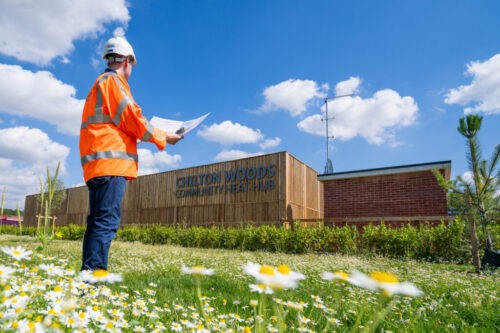
We're proud to be delivering a pioneering prefabricated Community Heat Hub and communal heat network at The Green Quarter in Southall. The project will provide low-carbon heating to 2,538 homes, demonstrating how modern energy infrastructure can accelerate delivery and support the transition to more sustainable communities.
- News
Why utilities fragmentation is holding back housing delivery
Utilities may account for only a small proportion of development costs, but their impact on programme delivery is significant. Discover why integrated multi-utilities delivery is helping developers reduce risk, improve efficiency and protect project outcomes.
- News
Digitalisation and Low-Carbon Housing: What Developers Need to Know
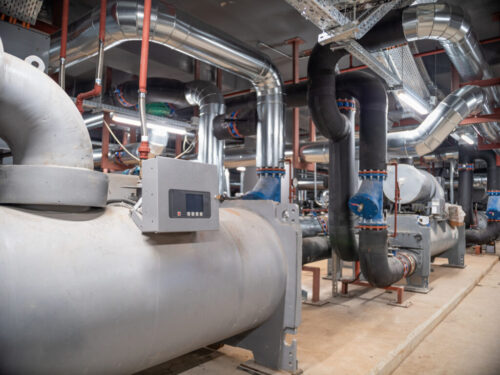
Neil Fitzsimons, Managing Director of Power On, explores how digitalisation is reshaping the UK's residential sector. From Networked Ground Source Heat Pumps to Community Heat Hubs and smart controls, this article sets out how developers, M&E consultants, and utility specialists can design, build, and operate genuinely future-ready low-carbon homes.