
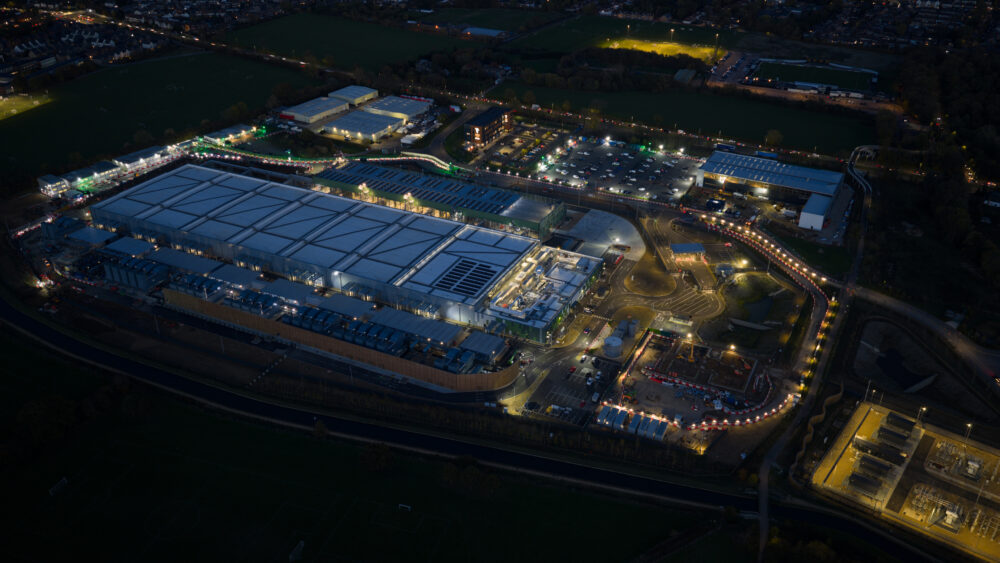
EHV Grid Connections for Data Centres
Power On delivers Extra High Voltage (EHV) grid connections for data centres across the UK, helping developers secure capacity, reduce capital expenditure and accelerate energisation.
As AI, cloud computing and high-performance processing increase demand for power, large-scale data centres are increasingly reliant on EHV infrastructure up to 132kV. Securing grid capacity at this level presents significant technical, commercial and programme challenges – particularly around availability, cost control and resilience.
Power On provides end-to-end EHV grid connection services, from feasibility and network design through to construction, adoption and long-term operation.
EHV Infrastructure for Scalable Data Centre Power
Standard high voltage (HV) networks are often insufficient for the substantial and rapidly growing power demands of hyperscale and colocation data centres. Extra High Voltage (EHV) infrastructure provides the higher capacity required for resilient and scalable operation.
We design and deliver EHV grid connections up to and including 132kV, ensuring infrastructure is future-proofed for expansion and long-term performance.
Dual-Feed EHV Design for Resilience
To enhance security of supply, we utilise two independent EHV circuits from the grid connection point, creating a dual-feed arrangement that ensures continuity.
If one circuit experiences a fault or outage, the second circuit maintains the load – delivering robust resilience and uninterrupted power flow to the data centre. This approach supports high-availability environments where downtime is not an option.
ICP Design, Build and IDNO Adoption
Power On operates as a NERS-accredited Independent Connection Provider (ICP), enabling in-house design and construction of new EHV electricity networks.
With full Independent Distribution Network Operator (IDNO) capability, we can also adopt, own and operate these assets long term.
This integrated model enables:
- UK-wide EHV grid connections up to 132kV
- Streamlined DNO and network operator approvals
- Accelerated energisation programmes
- Reduced upfront CAPEX through asset adoption
- Private wire EHV solutions beyond the meter
- Long-term operation and maintenance by a regulated energy business
By investing in and adopting the electricity infrastructure it delivers, Power On significantly reduces development capital expenditure while providing certainty over long-term asset performance.
From Feasibility to Energisation
We work directly with data centre developers and operators throughout the full project lifecycle.
Early-stage feasibility and grid optimisation unlock commercial value through smart, innovative EHV design – de-risking capacity, cost, programme and technical complexity.
Neil Fitzsimons, Managing Director at Power On, comments:
“EHV connections are complex on many fronts, from issues of grid capacity to cost control concerns. Power On leverages its long-term expertise in the electricity market to give data centres greater control over all aspects of EHV, de-risking the whole process.”
Secure EHV Capacity for Your Data Centre Development
If you are planning a new data centre or expanding an existing facility, speak to our EHV specialists about securing grid capacity and delivering a resilient 132kV connection.
Explore our full grid connection capabilities here: https://www.poweron-uk.co.uk/grid-connections/
Further news at Power On...
- News

Prefab community heat hubs offer time - and cost-effective solution for high rise developments
We're proud to be delivering a pioneering prefabricated Community Heat Hub and communal heat network at The Green Quarter in Southall. The project will provide low-carbon heating to 2,538 homes, demonstrating how modern energy infrastructure can accelerate delivery and support the transition to more sustainable communities.
- News
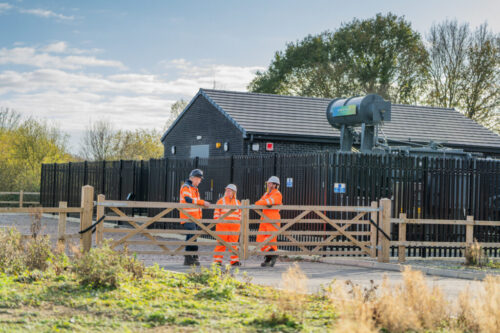
Why utilities fragmentation is holding back housing delivery
Utilities may account for only a small proportion of development costs, but their impact on programme delivery is significant. Discover why integrated multi-utilities delivery is helping developers reduce risk, improve efficiency and protect project outcomes.
- News
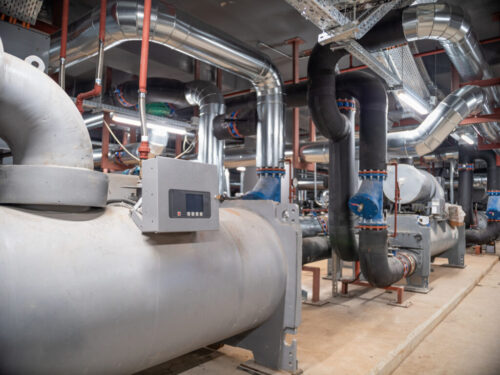
Digitalisation and Low-Carbon Housing: What Developers Need to Know
Neil Fitzsimons, Managing Director of Power On, explores how digitalisation is reshaping the UK's residential sector. From Networked Ground Source Heat Pumps to Community Heat Hubs and smart controls, this article sets out how developers, M&E consultants, and utility specialists can design, build, and operate genuinely future-ready low-carbon homes.