

DNO vs IDNO: What You Need to Know
DNOs aren’t the only option anymore. Find out how IDNOs deliver the same safe, reliable electricity networks – with added commercial and delivery advantages.
If you’re planning a new development, you’ll need an electricity connection. For years, many developers defaulted to their local Distribution Network Operator (DNO) – often because they thought it was the only safe option.
But that’s no longer the case.
In fact, choosing an Independent Distribution Network Operator (IDNO) can give you more flexibility, better service, and genuine cost advantages – without compromising on safety or reliability.
Here’s what you need to know.
What is a DNO?
A Distribution Network Operator is a company licensed by Ofgem to own and operate the electricity network in a specific UK region. The UK is divided into 14 regions, each served by one of six DNO groups.
A DNO’s role is to keep the local network running. They maintain and operate the existing infrastructure, connect new customers, and ensure electricity is delivered safely and reliably.
Until the early 2000s, DNOs were the only option for new connections. That monopoly meant little competition, longer timelines, and limited flexibility for developers who had to work within the DNO’s processes and schedules.
What is an IDNO?
To introduce competition and improve service for new connections, Ofgem created the Independent Distribution Network Operator model.
An IDNO has exactly the same licence obligations and regulated standards as a DNO – so there’s no difference in terms of safety or technical requirements – but their focus is different. IDNOs typically operate newly built networks rather than the existing regional infrastructure, and they can work anywhere in the UK.
Because IDNOs compete for projects, they have every reason to be more responsive and commercially flexible. That could mean exploring alternative engineering solutions, adjusting delivery programmes to match your build schedule, or offering an asset value (also known as an adoption payment) to reduce your upfront costs.
How the Approach Differs
A DNO works within fixed processes and is bound to operate only in its own region. Their delivery timescales and design standards are set, and there’s usually little scope for tailoring them to an individual project.
An IDNO isn’t tied to those regional boundaries. They can take a more agile approach to project delivery – finding ways to design the network around your site’s specific needs, competing on price and service, and always investing in the network they adopt. That investment comes in the form of an asset value payment, which directly reduces your capital expenditure and frees up budget for the rest of your development.
Are IDNOs as Safe as DNOs?
Absolutely. IDNOs are regulated by Ofgem to the same technical and safety standards as DNOs, and their networks connect into the same national grid. The only difference is in the commercial model – not the safety, quality, or reliability of the infrastructure.
Choosing an IDNO doesn’t mean taking a risk. It means choosing a partner whose business model is built around efficiency, flexibility, and competitive delivery.
Why Work with Power On
Power On is the ICP within the BUUK Infrastructure Group. That means we design and build your network in-house, and then our in-group licensed IDNO adopts, owns, and operates it for the long term. From your perspective, it’s one seamless process – a single, joined-up team from the first design through to decades of operation.
Because we know we’ll be running your network for decades to come, we build it to last. Every cable, joint, and substation is installed to the highest standard, and our in-house teams stay responsible for maintaining and operating the network for the next 45+ years.
As part of the BUUK Infrastructure Group, we have the financial strength to invest in your network, reduce your upfront costs, and give you an end-to-end delivery model that keeps control and quality in one place.
Your network is too important to be just another job in someone’s queue. With Power On, you get a regulated, trusted partner committed to your project’s success for the long term.
There are also advantages a DNO cannot match:
- Multi-utility capability – with Power On and BUUK, you can coordinate electricity, heat, water, wastewater, and fibre as part of one integrated solution.
- A dedicated project team – including sales contacts, project managers, senior designers, and tendering engineers who stay focused on your scheme from start to finish.
This combination means you get a regulated partner that delivers the highest safety standards, genuine commercial advantages, and a smoother process – with one accountable team by your side throughout.
Further news at Power On...
- News

Prefab community heat hubs offer time - and cost-effective solution for high rise developments
We're proud to be delivering a pioneering prefabricated Community Heat Hub and communal heat network at The Green Quarter in Southall. The project will provide low-carbon heating to 2,538 homes, demonstrating how modern energy infrastructure can accelerate delivery and support the transition to more sustainable communities.
- News
Why utilities fragmentation is holding back housing delivery
Utilities may account for only a small proportion of development costs, but their impact on programme delivery is significant. Discover why integrated multi-utilities delivery is helping developers reduce risk, improve efficiency and protect project outcomes.
- News
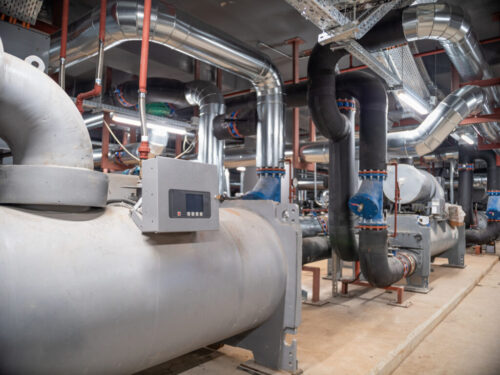
Digitalisation and Low-Carbon Housing: What Developers Need to Know
Neil Fitzsimons, Managing Director of Power On, explores how digitalisation is reshaping the UK's residential sector. From Networked Ground Source Heat Pumps to Community Heat Hubs and smart controls, this article sets out how developers, M&E consultants, and utility specialists can design, build, and operate genuinely future-ready low-carbon homes.